
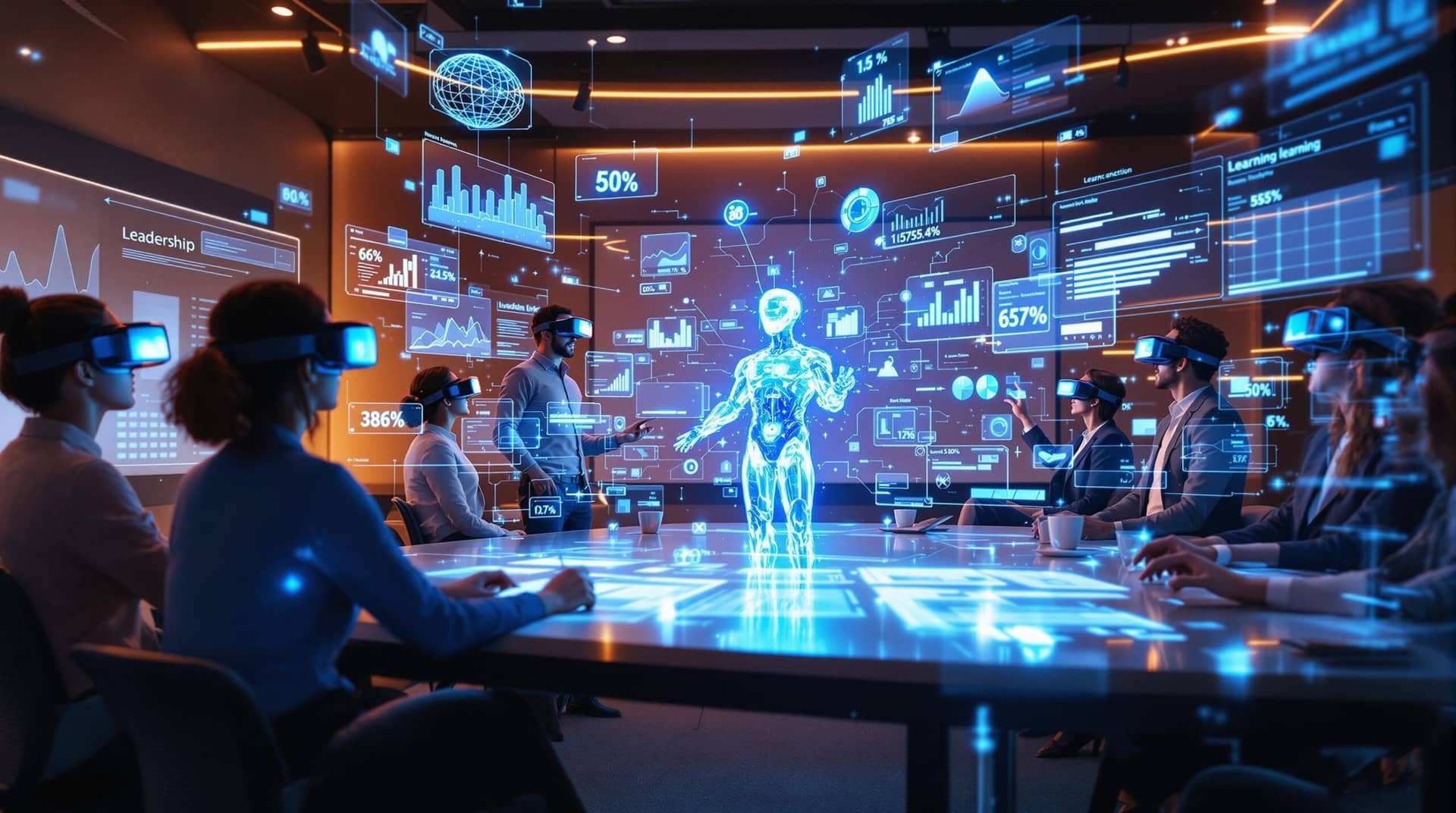
The strategic integration of artificial intelligence is revolutionizing how we prepare future leaders to navigate complex business challenges. Future leaders equipped with AI-enhanced skills demonstrate measurably superior decision-making capabilities and adaptability in rapidly changing environments, making AI integration in leadership development no longer optional but essential.
Key Takeaways
- Organizations using AI-driven analytics report a 30% improvement in management decision-making effectiveness
- AI-enhanced leadership programs achieve 2.5x faster skill acquisition compared to traditional methods
- Companies implementing AI for leadership pipelines experienced 19% higher revenue growth
- Personalized AI learning paths can identify skill gaps with 95% accuracy, creating tailored development opportunities
- The ideal balance appears to be 60% AI/40% human coaching for developing future leaders
The Transformative Role of AI in Developing Future Leaders
The traditional approach to leadership development is undergoing a profound transformation as organizations incorporate artificial intelligence into their programs. According to Emerald Insight (2024), companies leveraging AI-driven analytics have witnessed a 30% improvement in management decision-making effectiveness. This significant enhancement demonstrates why 87% of executives believe AI will fundamentally alter leadership roles within the next decade.For future leaders, mastering AI-enhanced decision-making is becoming as essential as traditional leadership competencies. Key technologies powering this revolution include predictive analytics that forecast outcomes based on historical data, natural language processing that enables more nuanced communication analysis, and adaptive learning algorithms that personalize development experiences.
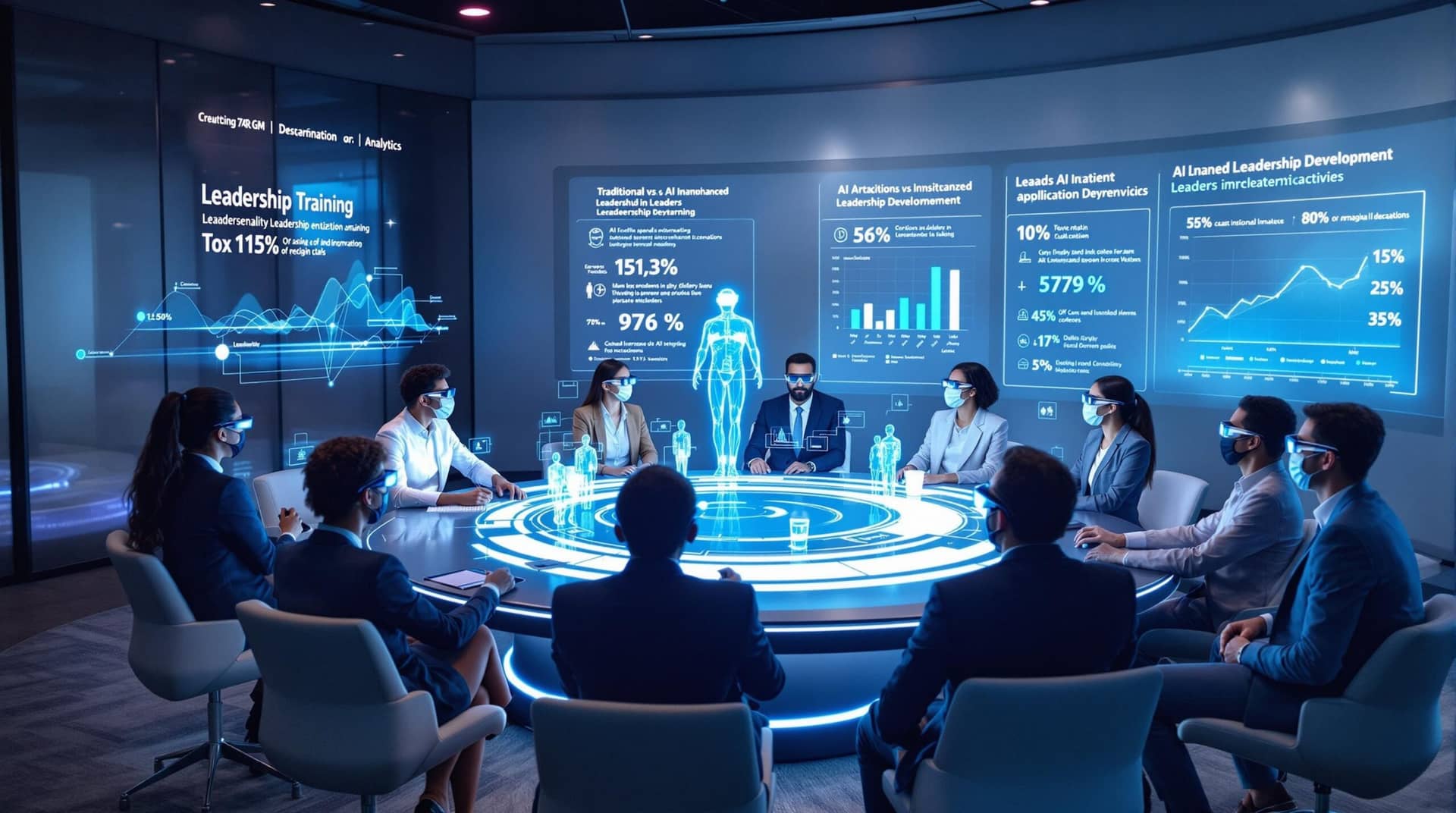
The contrast between traditional leadership programs and AI-enhanced alternatives is striking. Research from Harvard Kennedy School (2024) shows that future leaders in AI-enhanced programs achieve 2.5x faster skill acquisition than their counterparts in conventional training. Real-world implementation confirms these benefits - IBM’s AI coaching initiative reduced bias in promotion decisions by 22%, creating more equitable advancement opportunities for future leaders.
Personalized Learning Paths for Future Leaders
The power of AI in leadership development lies in its ability to create highly individualized learning experiences. Modern AI auditing tools can identify skill gaps with 95% accuracy according to Rocky.ai (2025), allowing future leaders to focus precisely on their development needs. Platforms like BetterUp and Crestcom LENS dynamically adjust content based on individual leadership styles, learning preferences, and career trajectories.These personalized approaches produce measurable results. Siemens’ implementation of an AI mentorship program for future leaders reduced leadership ramp-up time by 40%, accelerating the development of effective organizational leaders. The core components making this possible include:
- Behavioral analytics that identify patterns in decision-making
- Real-time feedback loops through tools like Rocky.ai's 5-minute daily reflection
- Micro-learning modules that adapt to individual progress
How AI is Redefining Leadership Intelligence for Future Leaders
The contrast between traditional leadership development and AI-enhanced approaches reveals a fundamental shift in how we understand leadership intelligence. While past methodologies relied heavily on intuition for decision-making, future leaders now benefit from data-driven scenario modeling that can test assumptions against multiple variables simultaneously.Feedback mechanisms have evolved from annual performance reviews to continuous real-time analytics. This transformation enables future leaders to make micro-adjustments to their leadership approach rather than waiting for formal evaluation cycles. I’ve found that organizations implementing these AI transformative leadership approaches report significantly higher engagement among emerging leaders.
For organizations looking to prepare future leaders, several “no-regret moves” stand out according to experts. These include investing in AI literacy across leadership tiers and fostering interdisciplinary collaboration between technology teams and leadership development specialists. The most successful programs blend technical capabilities with human judgment, creating leaders who leverage AI as a tool rather than being replaced by it.
Scaling Leadership Development with Ethical AI Considerations
One of the most compelling advantages of AI in developing future leaders is the ability to scale high-quality leadership development across global organizations. Tools like Glint and Cornerstone have reduced development plan creation time by 70% according to HR Executive (2025), enabling HR teams to focus on strategic guidance rather than administrative tasks.The impact of this scaling capability is evident in case studies like Unilever’s “Leadership in the Flow of Work” program, which successfully trained 15,000 managers in just six months using AI-driven methodologies. For organizations investing in future leaders, AI reduces per-learner costs by approximately 60% compared to traditional in-person workshops while maintaining or improving quality outcomes.
However, ethical considerations must guide implementation. A dynamic leadership approach balances AI capabilities with human oversight, especially since 43% of employees express skepticism about AI fairness in leadership evaluations. Future leaders need to understand both the power and limitations of these tools.
To address potential bias, organizations developing future leaders should implement:
- Transparency frameworks with published AI audit results
- Hybrid human-AI panels for high-stakes promotion decisions
- Regular testing of algorithms against diverse population samples
- Clear appeals processes for AI-influenced decisions
Measuring Effectiveness and Future Directions in AI Leadership Development
The impact of AI on leadership development programs can be quantified through several key metrics. Programs incorporating AI simulations report 25% higher retention of leadership concepts according to Midshift (2024), while organizations using AI for leadership pipelines saw 19% higher revenue growth per McKinsey research (2025).Future leaders benefit from various AI platforms targeting specific development needs. SAP SuccessFactors offers predictive succession planning, helping organizations identify high-potential candidates earlier. Talespin VR creates immersive empathy-training simulations that build emotional intelligence through practice rather than theory. Strivr provides AI-powered scenario modules where future leaders can test decision-making in consequence-free environments.
Organizations implementing AI for leadership development should consider these practical guidelines:
- Start with pilot programs for high-potential cohorts
- Budget between $15-50 per user/month for enterprise-level platforms
- Balance technology with human coaching (the ideal mix appears to be 60% AI/40% human according to Gartner)
Despite these advances, certain critical human skills remain essential for future leaders and resist full AI augmentation. These include crisis improvisation, cross-cultural diplomacy, and ethical decision-making under ambiguity – areas where human judgment and experience maintain distinct advantages over algorithmic approaches. The most effective development programs for future leaders recognize these limitations and design expert-guided programs that leverage AI while preserving irreplaceable human capabilities.