

According to a 2023 study by Technology Magazine, 67% of digital transformations fail due to cultural resistance rather than technological limitations. The organizational culture inventory represents a critical framework for understanding how company values and behaviors impact AI integration success. This assessment tool provides invaluable insights into cultural dynamics that either accelerate or hinder technological evolution within organizations.
Key Takeaways
- The organizational culture inventory measures three critical dimensions that predict AI adoption readiness
- Organizations with constructive culture styles demonstrate 40% faster AI implementation rates
- Using organizational culture inventory assessments helps identify specific cultural barriers to technological change
- Successful AI integration requires intentional cultural evolution guided by data-driven cultural metrics
- Companies implementing OCI-aligned transformation strategies report up to 60% reduction in change resistance
https://www.youtube.com/watch?v=1N7Q1nO8IyQ
Understanding the Organizational Culture Inventory Framework
The organizational culture inventory, developed by Human Synergistics in the 1980s, has become the gold standard for measuring workplace behavioral norms. This assessment evaluates twelve cultural styles across three primary dimensions that directly influence an organization's capacity for technological transformation. According to Human Synergistics research, organizations using the organizational culture inventory gain actionable metrics that pinpoint specific cultural barriers to change.The three critical dimensions measured by the organizational culture inventory include:
- Constructive Styles: Achievement, Self-Actualizing, Humanistic-Encouraging, and Affiliative norms that promote innovation and collaboration
- Passive/Defensive Styles: Approval, Conventional, Dependent, and Avoidance behaviors that maintain status quo
- Aggressive/Defensive Styles: Oppositional, Power, Competitive, and Perfectionist patterns that create resistance through control
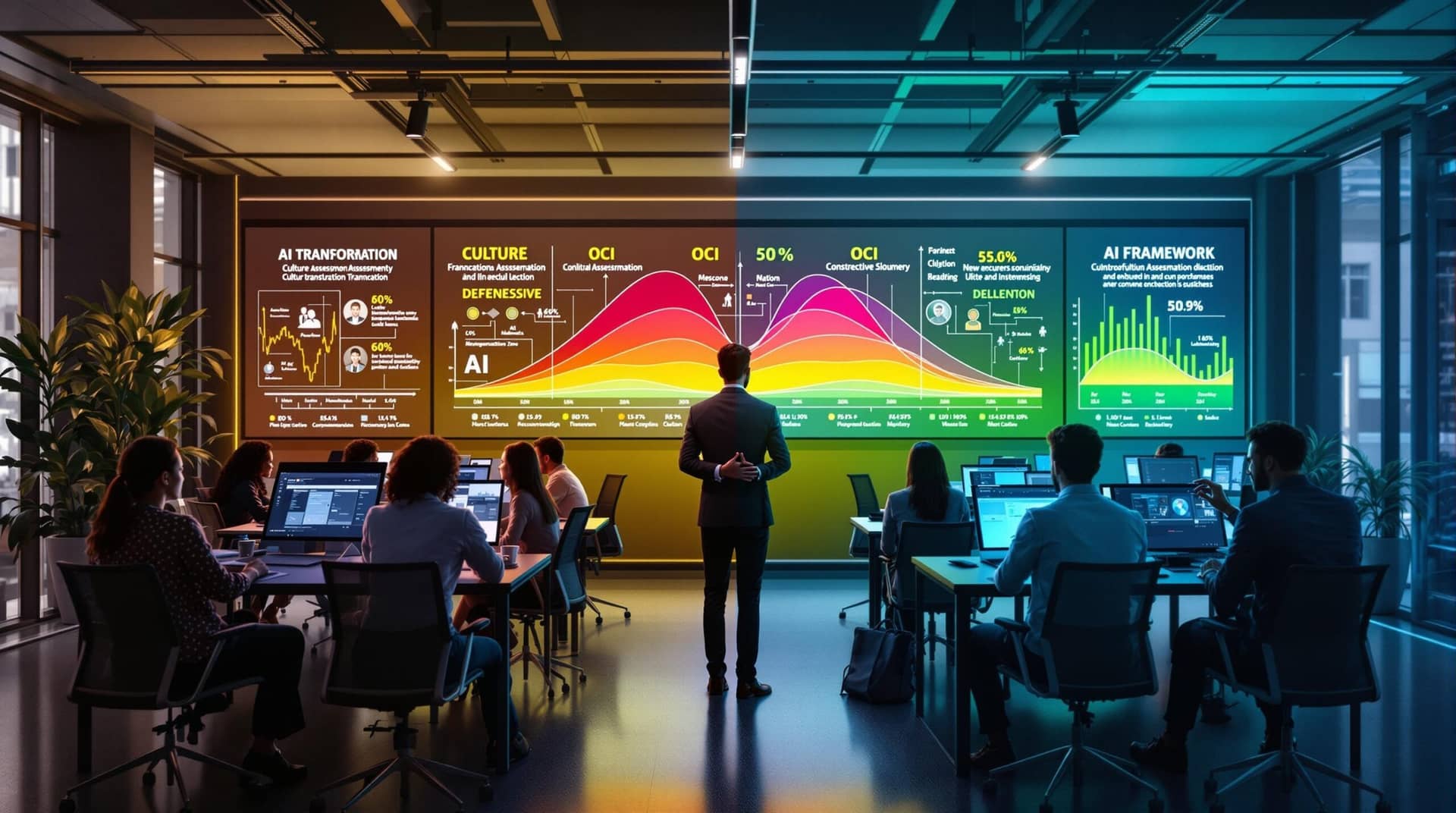
Complementary Cultural Assessment Tools for Organizational Culture Inventory
While the organizational culture inventory provides deep insights into behavioral norms, complementary assessment frameworks offer additional perspectives on cultural readiness for AI transformation. The Denison Organizational Culture Survey (DOCS) measures four essential pillars that complement organizational culture inventory results:- Mission - Strategic direction and intent
- Adaptability - Creating change and organizational learning
- Involvement - Empowerment and team orientation
- Consistency - Core values and coordination
The key difference lies in focus: the organizational culture inventory examines behavioral norms while DOCS emphasizes strategic alignment. Together, they create a powerful diagnostic framework for identifying cultural barriers to technological evolution.
Cultural Barriers Impeding Organizational Culture Inventory Implementation
The organizational culture inventory often reveals cultural barriers that organizations must address before successful AI adoption can occur. Stanford research shows how cultural models significantly shape AI preferences across different societies and organizational contexts. This reinforces why the organizational culture inventory serves as a critical diagnostic tool for understanding resistance patterns.Analysis of organizational culture inventory profiles reveals that 45% of employees in organizations with predominantly defensive cultures perceive AI as a threat rather than an enhancer. These cultural profiles predict specific resistance patterns:
- Passive/Defensive cultures: Silent resistance, information hoarding, and avoidance
- Aggressive/Defensive cultures: Active opposition, territorial behavior, and competitive undermining
- Constructive cultures: Productive questioning, collaborative problem-solving, and innovation support
Fear, Bias, and Resistance Patterns in Organizational Culture Inventory Assessments
Detailed organizational culture inventory assessments frequently uncover specific psychological barriers to AI adoption. According to research published in Frontiers in Psychology, these barriers manifest differently based on cultural profiles revealed in organizational culture inventory results.In Passive/Defensive cultures, the organizational culture inventory typically identifies avoidance behaviors such as:
- Reluctance to provide input during AI planning phases
- Superficial compliance without meaningful engagement
- Excessive deference to authority without critical thinking
- Minimal risk-taking or experimentation with new technologies
Cultural Transformation Strategies Using Organizational Culture Inventory Data
Successful AI transformative leadership requires leveraging organizational culture inventory results to design targeted cultural evolution strategies. Organizations can follow a structured approach based on their unique organizational culture inventory profile:- Assess current state: Use organizational culture inventory to establish cultural baseline
- Identify gap areas: Compare current profile to ideal profile for AI adoption
- Target specific behaviors: Develop interventions for problematic cultural dimensions
- Implement leadership modeling: Ensure leaders demonstrate desired behaviors
- Measure progress: Conduct follow-up organizational culture inventory assessments
Building Learning Organizations Through Organizational Culture Inventory Assessment
The organizational culture inventory serves as a foundation for developing learning organizations that embrace continuous adaptation to technological change. Organizational development experts recommend designing upskilling frameworks directly aligned with organizational culture inventory metrics to address specific cultural barriers.Companies successfully implementing the organizational culture inventory approach frequently adopt the 15-20% workload allocation rule for AI experimentation—dedicating this portion of employee time to learning and innovation activities. This practice creates psychological safety within the existing cultural framework while gradually shifting norms toward more constructive patterns.
Long-term organizational culture inventory data suggests that cultures prioritizing Achievement will dominate AI-driven markets by 2035. Organizations using the organizational culture inventory to guide their cultural evolution are positioning themselves for this future competitive advantage through future leaders development and cultural alignment.
Case Studies: Organizational Culture Inventory in Action
Several organizations have successfully used the organizational culture inventory to guide their AI transformation journeys. Tech Mahindra achieved a 60% reduction in resistance through organizational culture inventory-aligned Constructive norm development, systematically shifting their culture from Passive/Defensive to Constructive patterns that embraced technological change.Pluralsight leveraged their organizational culture inventory insights alongside DOCS Mission alignment to increase course completion rates by 35% during their AI learning initiative. By addressing specific cultural barriers identified in their organizational culture inventory assessment, they created targeted interventions that accelerated adoption.
Zscaler’s success story demonstrates how the organizational culture inventory can identify departmental differences in cultural readiness. Their targeted approach based on organizational culture inventory data enabled them to automate 50% of manual processes by addressing cultural resistance at its source—specific Defensive cultural norms that were impeding progress.
Lessons from Successful Cultural Transformations Using the Organizational Culture-Inventory
Analysis of cross-industry organizational culture inventory implementations reveals common patterns in successful AI-culture alignment. Organizations achieving the greatest success share several key practices:- Integrating organizational culture inventory assessments into AI implementation planning from the outset
- Recognizing that cultural transformation runs parallel to, not after, technological change
- Combining multiple assessment frameworks for comprehensive cultural diagnosis
- Setting realistic timelines for cultural evolution based on organizational culture inventory baseline data
- Celebrating and reinforcing shifts toward Constructive norms throughout the transformation
Creating a Culturally-Aligned AI Roadmap
Developing an effective AI roadmap requires integrating organizational culture inventory insights throughout the planning process. Organizations should begin with a comprehensive organizational culture inventory assessment to establish their cultural baseline and identify specific barriers to technological evolution.The organizational culture inventory provides the data-driven foundation necessary for creating a culturally-conscious technological evolution strategy. By aligning AI implementation timelines with cultural transformation milestones, organizations can reduce resistance and accelerate adoption. This integrated approach represents a significant competitive advantage in increasingly AI-driven markets.
Organizations that understand the powerful connection between culture and technology—as revealed through the organizational culture inventory—will lead the next wave of AI innovation. Taking the first step with an organizational culture inventory assessment provides the cultural insights needed to guide your organization through successful technological evolution.